VidCon 2026 Celebrates 15th Anniversary with Focus on Creator-Led Media Companies
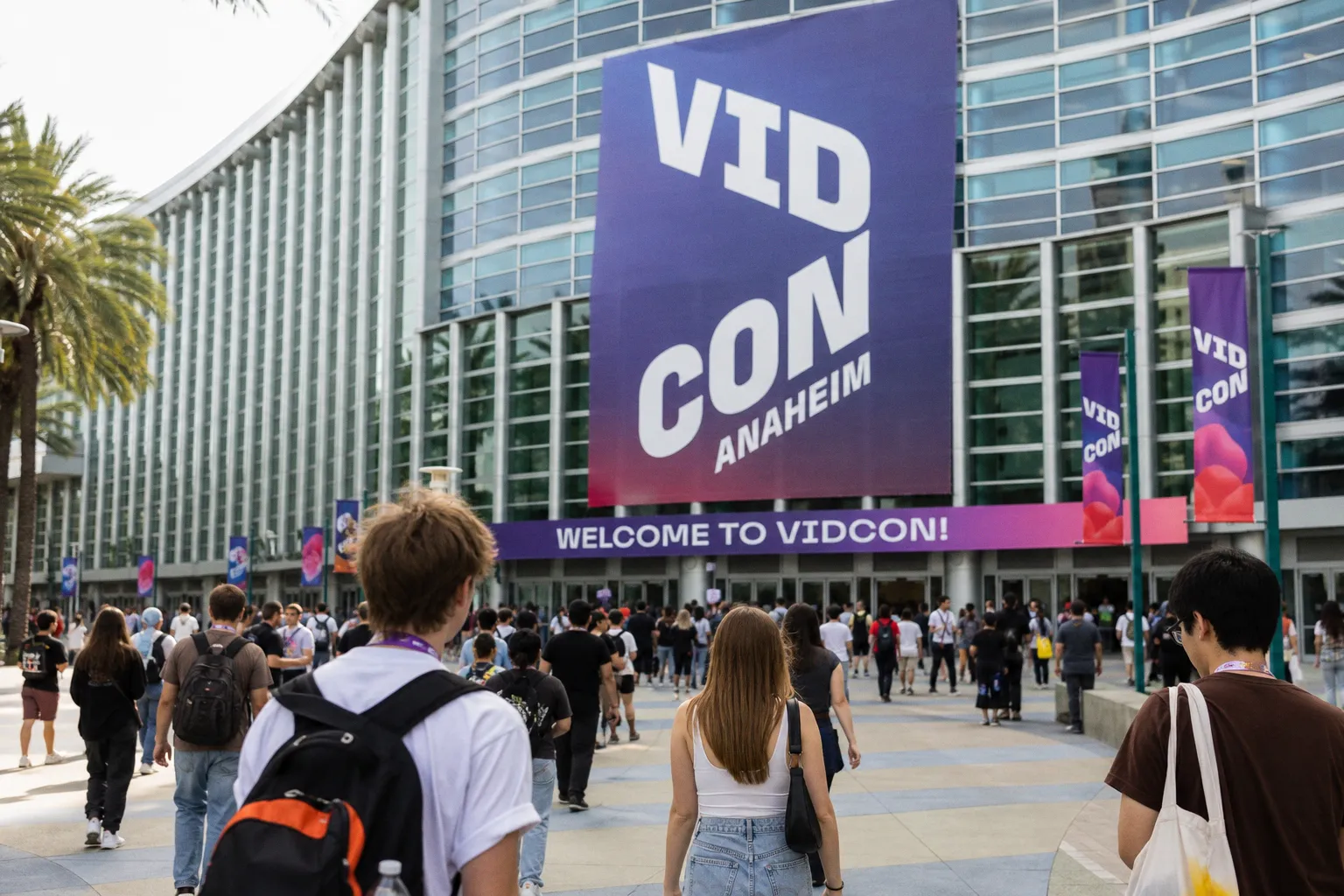
VidCon turns 15. Attendance sits between 50,000 and 75,000 in Anaheim. The real headline is structural: the conference floor now functions as a media industry trade show, not a fan meetup.
The Venue Pivot
Founded in 2010 by John and Hank Green as a grassroots YouTube gathering, VidCon now runs three distinct tracks: Fan, Creator, and Industry. Mashable digital culture editor Crystal Bell frames the shift as "the creator economy's coming-of-age story." The translation: the convention moved from fan-to-creator interaction to creator-to-executive dealmaking.
The 2026 Hall of Fame inductees — Markiplier, Philip DeFranco, Michelle Phan, Cassey Ho — fit a single archetype. Production arms, merchandise pipelines, fitness media companies. VidCon is celebrating the diversified, not the viral. That editorial choice tells you where the industry wants to point the next generation of talent.
The Management Layer Hits Its Ceiling
Fixated paid seven figures for a Roblox-focused shop. Night raised $70 million to push into gaming and live events. Launchd, UnderCurrent, and Winclap are consolidating smaller firms. No Logo built an AI agent to represent creators traditional agencies reject.
The role of the manager has inverted. The old job sold a creator's attention, one campaign at a time. The new job operates the business behind the creator. Jason Wilhelm of Fixated: he entered management "thinking of them as more businesses rather than just influencers getting brand deals." Justin McBryan of Affluence calls the new role "the employer to the self-employed."
The ceiling is attention. Managers cannot scale their own hours. MCNs of the last decade tried to bypass that constraint and failed — thin intermediation added no real value to a creator's revenue stack. The 2026 bet is consolidation: fewer, larger firms with actual operating capacity.
Meanwhile, the mid-tier compresses. Aurora Pfeiffer of Outloud Talent: "A lot of the middle class creators right now are struggling... those that are relying heavily on brand deals are just having a harder time to make the kinds of money they were previously." Algorithmic decay on the major platforms tightened the funnel. The rational move is portfolio revenue: subscriptions, owned IP, licensing. Hot Ones scaled from a low-budget YouTube show to 30 seasons and forced late-night hosts to publicly question whether the traditional interview format is obsolete. That is the template worth cloning.