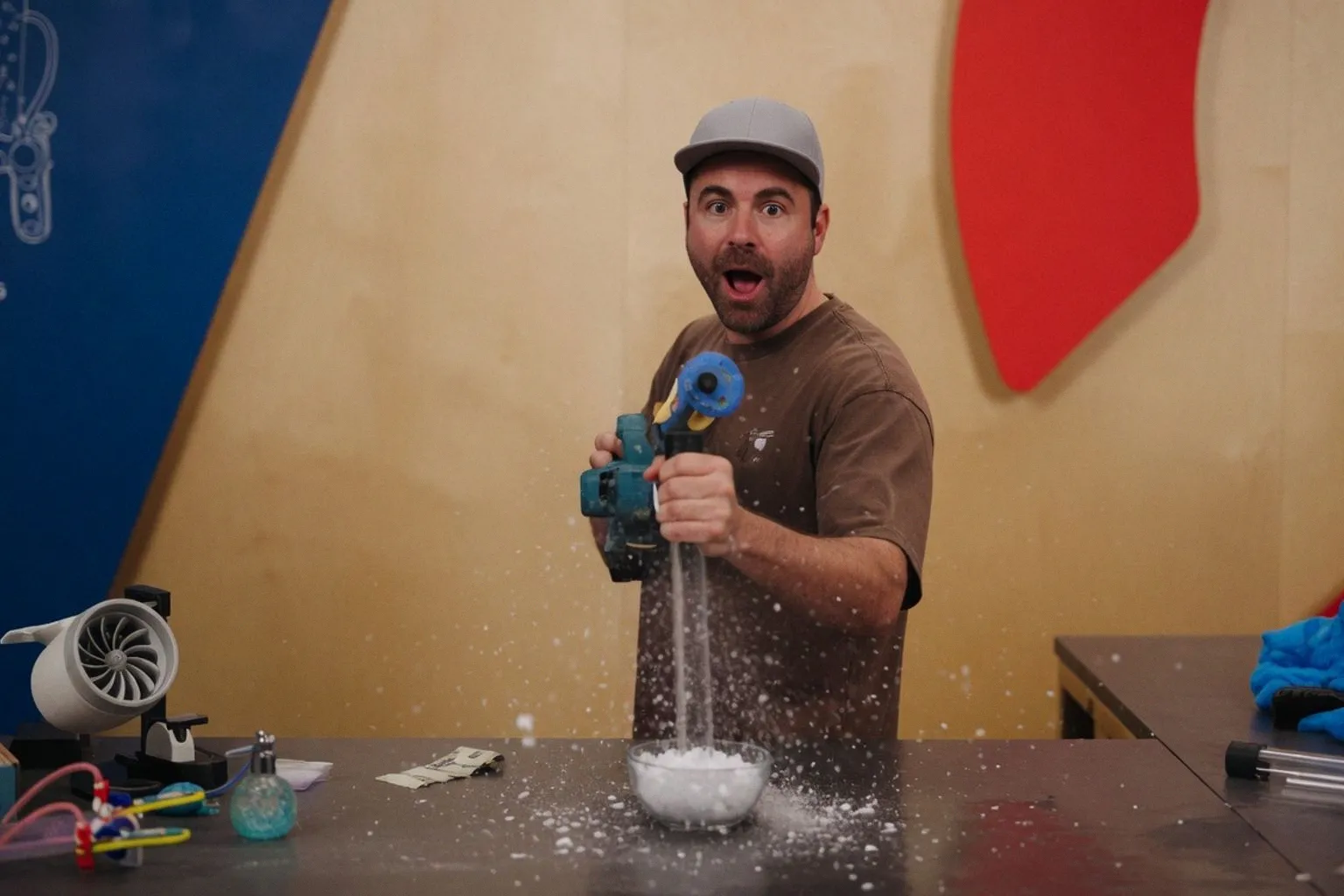
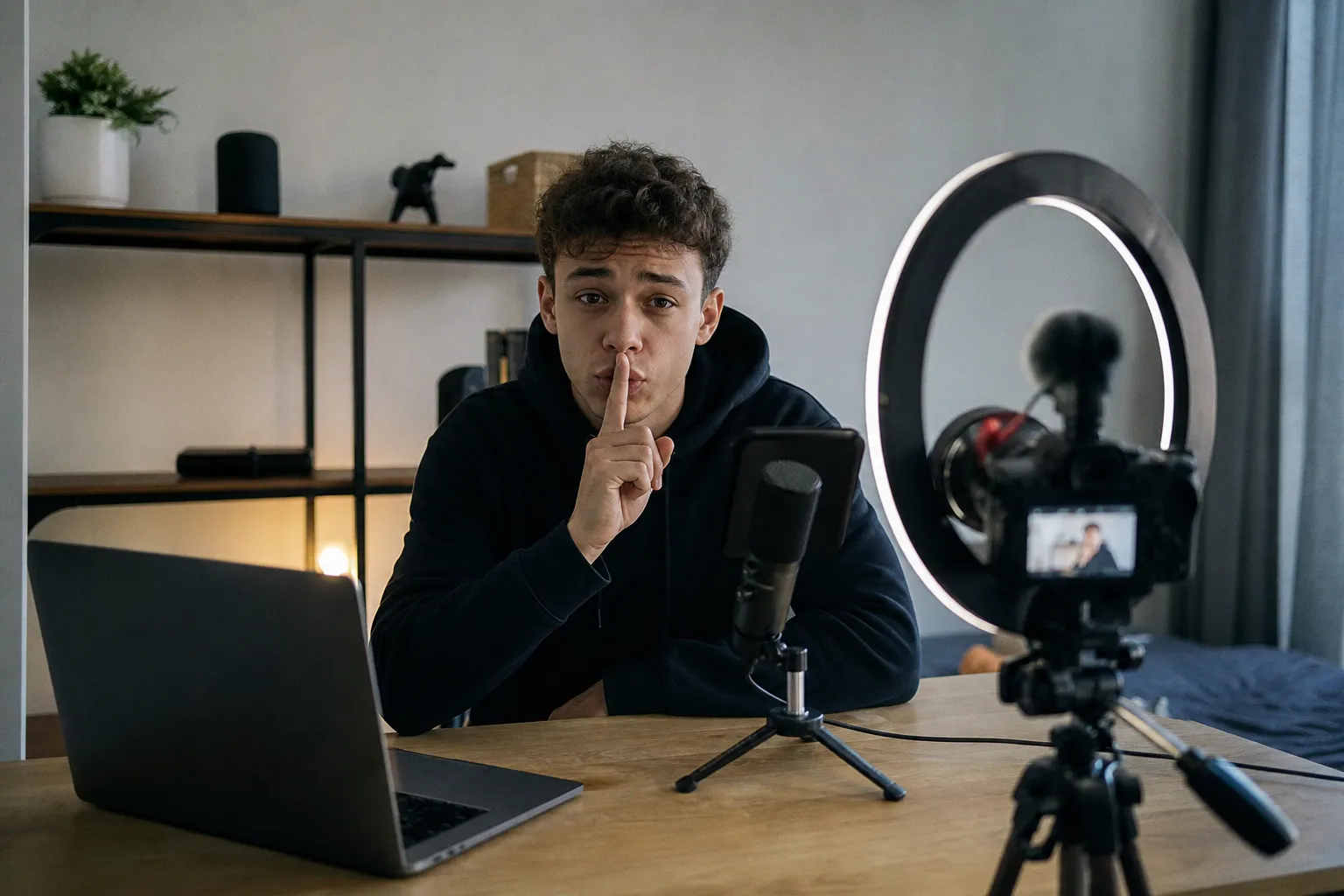
Short form video content is no longer a single product. A 20-second reaction clip, a 75-second TikTok explainer, and a three-minute YouTube Short may all look like vertical video.
Operationally, they sit in different recommendation systems, measurement models, rights regimes, and revenue pools.
That distinction now determines ROI.
The old creator playbook was simple: produce volume, catch a sound trend, accumulate views, sell the resulting attention. The 2025–2026 platform stack is less forgiving. Public view numbers have become less comparable. Originality rules have tightened. Search is gaining ground against pure feed discovery. And platforms are testing content with non-followers before risking a creator’s existing audience.
The result is a more complex market for vertical video engagement. Reach still matters. But the usable metric is not reach alone. It is qualified reach: views that remain recommendation-eligible, monetization-eligible, rights-clean, and capable of converting into a durable audience.
1. “Short” now extends beyond the 60-second ceiling
The first structural change is duration. Short form no longer automatically means sub-minute.
TikTok’s Creator Rewards Program requires qualifying videos to run longer than one minute. That does not mean every 61-second upload earns money, or even qualifies for distribution. It does mean the platform has created a direct financial incentive for creators to build a more substantial unit of content than the old fast-cut, seven-second loop.
YouTube made an even clearer move. For standard channels, square or vertical videos uploaded on or after October 15, 2024 can be categorized as Shorts if they are up to three minutes long.
This changes the production calculus.
A three-minute Short can carry a product comparison, a mini-investigation, a technical tutorial, a structured story, or a multi-step opinion. It can hold more search value than a disposable meme. It can also support a higher-value sponsor integration, although branded content has separate limitations on TikTok’s rewards model.
The market is splitting into two short-form formats:
| Format | Typical commercial function | Main weakness |
|---|---|---|
| Ultra-short clip | Fast reach, trend participation, low-friction discovery | Weak context and limited monetization depth |
| 60-second-plus vertical video | Search discovery, explanation, rewards eligibility, stronger conversion | Higher production cost and retention risk |
| Up-to-three-minute YouTube Short | Durable topic coverage and broader narrative range | Rights claims and pacing failures become more costly |
The key error is treating longer vertical video as a free upgrade. It is not. A longer video has more inventory to lose. If the opening fails, the creator does not merely lose a few seconds of watch time; they lose the premise, the recommendation test, and the production budget.
The three-minute Short is not long-form in miniature. It is a higher-cost short-form asset with a stricter retention problem.
For media entities built around repeatable expertise—gaming analysis, beauty testing, creator news, product hacks, commentary—the expanded duration is useful. For accounts built only on visual surprise, it is mostly friction.
2. Search is becoming a second distribution engine
For years, the short-video market was sold as an algorithm lottery. That framing was good PR. It was never a full operating model.
TikTok explicitly identifies user interactions, content information, and user information as recommendation inputs. The weighting of those inputs can change over time. That caveat matters. There is no permanent “winning signal” that a creator can game indefinitely.
But TikTok has also built a more legible route into demand: search.
Creator Search Insights is designed to show topics people are searching for in selected regions. TikTok also includes “search value” among the factors used in its Creator Rewards framework. The implication is clear enough. A video answering a visible demand query has a different economic profile from one built around a transient audio trend.
That does not eliminate the role of viral content mechanics. It changes where virality starts.
A feed-first video competes for interruption. A search-oriented video competes for relevance. The first relies on immediate behavioral response. The second can accumulate views after publication because it answers a question viewers continue to ask.
Creators increasingly need two separate content lanes:
1. Demand capture. Videos built around recurring queries, product confusion, platform updates, niche comparisons, or explainers. These have a longer shelf life and can generate search discovery.
2. Demand creation. Clips built to trigger conversation, imitation, debate, or curiosity in the feed. These may spike faster but are exposed to algorithmic decay.
The best creator businesses do not confuse the two. They budget them differently.
A search-led video can justify more research and editing because its useful lifespan may be longer. A trend-led post should be produced with lower marginal cost because its window is often brief. Spending premium production money on a 24-hour trend is usually bad unit economics.
3. Recommendation eligibility is a separate gate from rule compliance
One of the least understood facts in social media video trends is that allowed content is not necessarily recommended content.
TikTok makes this distinction directly. A post may remain on the platform while being ineligible for the For You feed because it does not meet recommendation standards. Meta applies a similar logic: some material may remain available but be removed from recommendations, hidden from teens, or treated differently in discovery surfaces.
This creates a visibility hierarchy:
- Removed content: a policy failure. No distribution.
- Permitted but recommendation-limited content: technically live, commercially weakened.
- Recommendation-eligible content: able to compete for feed distribution.
- Monetization-eligible content: an additional and stricter commercial layer.
Creators often collapse these categories into one question: “Did I get banned?” That is the wrong question. The more useful question is: “Which distribution and revenue surfaces can this asset still access?”
A video can avoid a strike and still produce negligible reach. It can generate public views and still fail to produce eligible monetization views. It can be highly shared among existing followers and still fail to expand beyond them.
This is particularly relevant for creators whose content relies on reused clips, aggressive commentary, sensitive subjects, low-context shock material, or borderline claims. The account may remain visible. The growth curve may not.
The platform does not need to remove a creator to reduce their business value. It only needs to lower recommendation access.
4. Originality has become a revenue filter, not a branding slogan
The recycled-content model is under pressure.
TikTok’s Creator Rewards Program requires videos to be original, high-quality, longer than one minute, and compliant with Community Guidelines. Its definition excludes Duets, Stitches, and sponsored content from qualifying as original content for the program.
That is a narrow but commercially significant rule. Duets and Stitches can still be useful audience tools. They can drive commentary, proximity to a larger creator, or low-cost participation in a moment. But they should not be confused with reward-eligible inventory.
YouTube applies a similar commercial filter. Shorts monetization excludes non-original content, artificial or fake views, and views that conflict with advertiser-friendly guidelines. The platform is not paying simply for something that played on a screen. It is paying for eligible engaged views within a revenue-allocation system.
This is where many short-form portfolios fail the accounting test.
A repost account may show enormous top-line views. A compilation channel may appear efficient because source material is cheap. But the underlying asset has weak defensibility:
- Rights exposure is high.
- Monetization eligibility is uncertain.
- Sponsor value can be limited by brand-safety concerns.
- Platform policy changes can erase distribution overnight.
- The account may not own a repeatable format beyond other people’s work.
Originality is not a moral category in this context. It is a margin-protection mechanism.
A creator with a recognizable editorial format—recurring field tests, specific data analysis, a distinct reporting angle, owned footage, or a repeatable visual system—has more options. They can monetize through platform pools, sponsorships, affiliate conversions, memberships, and direct audience products. The clip is not merely content. It is proprietary inventory.
Reused footage can buy impressions. Owned formats build an asset base.
5. YouTube’s public view count is now a weaker revenue signal
On March 31, 2025, YouTube changed the way public Shorts views are counted. A view now registers whenever a Short starts to play or replay, without a minimum watch-time requirement.
This is good for headline numbers. It is bad for lazy analysis.
YouTube retained the older continuation-based metric in Analytics as “Engaged views.” That is the critical distinction because YouTube Partner Program eligibility and Shorts ad-revenue sharing continue to rely on eligible engaged views, not the enlarged public count.
In practical terms, a creator can report a major surge in Shorts views while seeing limited movement in monetizable output. The dashboard may look better. The revenue model may not have changed proportionately.
For analyst purposes, the metrics now do different jobs:
| Metric | What it indicates | What it does not prove |
|---|---|---|
| Public Shorts views | Exposure starts and replays | Monetization eligibility or meaningful retention |
| Engaged views | A stronger continuation-based consumption signal | Guaranteed payout |
| Valid public Shorts views | Progress toward YPP thresholds | Long-term audience value |
| Shares, comments, likes | Audience response signals | A universal ranking advantage across platforms |
| Revenue | Actual commercial output | That the format is scalable without rising costs |
The market will continue to celebrate inflated public numbers because large numbers travel well in press releases and brand decks. That does not make them useless. It makes them incomplete.
Creators and managers need to separate four layers of reporting: reach, engaged consumption, eligibility, and revenue. Without that separation, ROI analysis becomes fiction.
6. Shorts monetization remains a scale business
Short form video monetization is real. It is also structurally demanding.
For full YouTube Partner Program ad-revenue access through the Shorts route, a channel needs 1,000 subscribers and 10 million valid public Shorts views over the previous 90 days. In eligible regions, expanded YPP access can begin earlier at 500 subscribers, three public uploads within 90 days, and 3 million valid public Shorts views in 90 days.
Those thresholds reveal the platform’s priorities. YouTube is not treating Shorts revenue as a casual creator bonus. It is designed around sustained volume and validated audience activity.
The Shorts Feed ad model is also pooled. Revenue is pooled by country, allocated using creators’ shares of eligible engaged views, and creators receive 45% of their allocated Creator Pool revenue.
That is not a fixed rate per thousand views. No responsible operator should promise one.
Payouts vary with geography, eligible views, advertiser demand, music licensing effects, content suitability, and the size of the pool. Public view totals alone cannot calculate the result.
TikTok’s requirements are also explicit: applicants to Creator Rewards must be at least 18, maintain an account in good standing, have at least 10,000 followers, and record at least 100,000 video views in the previous 30 days. The program must also be available in the creator’s location.
This produces a blunt conclusion: platform payouts are not the first business model for most short-form creators. They are a secondary layer until the account reaches consistent scale.
The more stable revenue stack is typically diversified:
- Platform revenue where eligibility exists.
- Brand integrations designed as separate commercial inventory.
- Affiliate links tied to high-intent search content.
- Long-form video, newsletters, memberships, products, or live formats that capture deeper conversion.
- Audience channels not fully controlled by one recommendation feed.
The creator who relies on one pool, one dashboard number, and one platform is not operating a media business. They are renting distribution.
7. Instagram is turning experimentation into a formal product
Instagram’s Trial Reels are a direct response to the creator’s oldest fear: publishing a format experiment and damaging performance with existing followers.
Trial Reels are shown to non-followers first. Creators can review views, likes, comments, and shares after roughly 24 hours. They can then publish the Reel to everyone manually or allow Instagram to share it automatically with followers if it performs well on views during the first 72 hours.
This is a meaningful operational shift.
Before Trial Reels, creators had to test risky formats in public. A new topic, visual language, pacing style, or niche pivot could confuse their existing audience and weaken immediate engagement. Now Instagram offers a constrained testing environment.
It is not a guarantee of reach. It is a controlled experiment.
That changes how established creators should approach pivots. Instead of rebuilding the entire account around a new content hypothesis, they can test variables:
1. Topic shift: Does an audience respond when a fashion account moves into beauty or lifestyle analysis?
2. Format shift: Does the same information perform better as a talking-head Reel, a screen recording, or a caption-led edit?
3. Audience shift: Can a local creator reach an adjacent national or international interest group?
4. Commercial shift: Does an affiliate-oriented format generate enough interaction to justify repeated production?
5. Editorial shift: Can a creator move from reactive trend coverage to original reporting without losing distribution?
The value is not that every test wins. The value is that failed tests can be contained.
Instagram is also pushing broadcast channels as a retention layer rather than a pure discovery engine. Meta says creators and followers exchange more than 1.5 billion messages each month in these channels. Replies, prompts, interaction reporting, Story shares, and poll votes turn the channel into a lower-friction feedback loop. Prompts can remain open for up to 24 hours.
For a creator business, broadcast channels are not a replacement for the feed. They are a hedge against it. Feed distribution is volatile. Direct audience interaction is more measurable and can reveal what the audience will actually respond to before production money is committed.
8. Rights management can erase a three-minute YouTube Short
The expansion to three-minute Shorts comes with a sharp technical constraint.
A YouTube Short longer than one minute with an active Content ID claim is blocked globally. It cannot be recommended or monetized until the claim is resolved.
This is not a minor revenue deduction. It is a distribution shutdown.
The implication is straightforward: longer Shorts require more disciplined rights management than quick trend edits. A creator using a track, clip, broadcast fragment, or third-party visual without clear permission may lose the entire asset after spending time on research, filming, editing, and launch promotion.
For creators building short-form teams, rights review now belongs earlier in the workflow:
- Confirm music and clip permissions before the edit is locked.
- Treat third-party footage as a cost center, not free material.
- Maintain a reusable library of owned visuals, licensed audio, and cleared templates.
- Separate editorial commentary from raw reposting.
- Do not assume a video that is visible today will remain monetizable tomorrow.
This is especially relevant in the TikTok vs YouTube Shorts comparison. TikTok’s rewards rules already exclude certain formats and sponsored material from qualifying originality. YouTube’s Content ID system can block a longer Short outright. The platforms differ in mechanics, but the direction is the same: borrowed attention is becoming harder to convert into stable platform revenue.
The bottom line: creators are being pushed toward portfolio thinking
Short form video content still produces the fastest audience spikes in the creator economy. But the economics are changing underneath the spectacle.
TikTok is making longer, original, search-aligned content more commercially relevant. YouTube has increased the public view count while preserving engaged views as the meaningful monetization measure. Instagram is offering cleaner testing through Trial Reels and deeper audience feedback through broadcast channels. Across all three, recommendation eligibility sits between basic compliance and actual revenue.
That leaves creators with a less glamorous but more useful operating model: build owned formats, measure qualified views, test before scaling, and avoid treating platform payouts as guaranteed income.
The next market winners will not necessarily be the accounts with the loudest view counters. They will be the ones that can turn vertical video engagement into repeatable inventory, defensible distribution, and conversion outside a single algorithm.