The strange thing about TikTok in 2026 is that it can make a creator feel more famous and more invisible at the same time.
That is the defining contradiction of the latest TikTok algorithm update. The app that trained a generation to believe in the democratic chaos of discovery has become more cautious, more relational, and less willing to hand strangers your work until your existing audience proves it deserves the trip. For creators who woke up to suddenly flat views, the feeling has been brutal: not a scandal, not a ban, not even necessarily a bad video — just a redistribution of attention under new rules.
The 2026 shift: from viral lottery to follower-first distribution
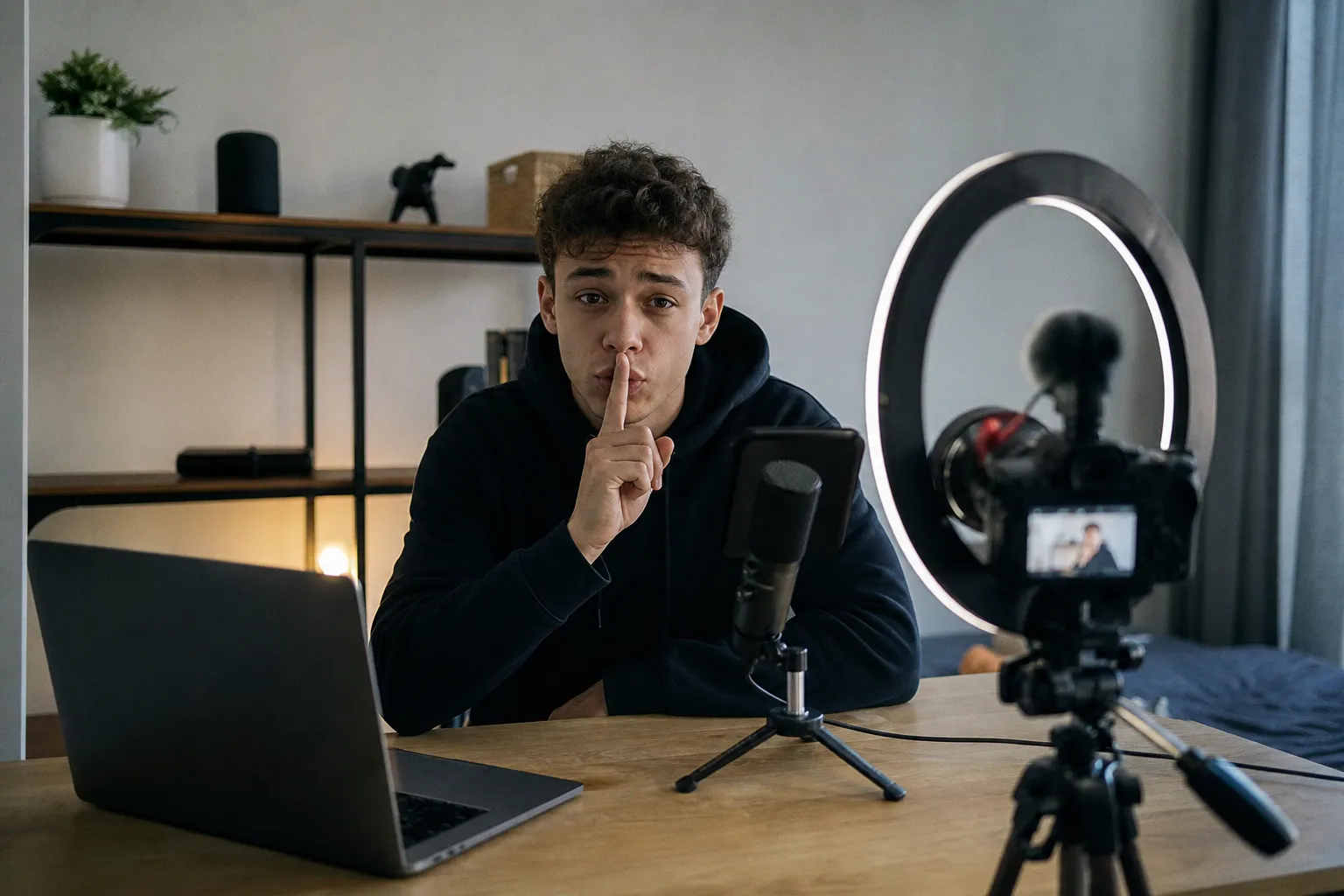
For years, TikTok’s mythology rested on the idea that any clip could escape its maker. A teenager in a bedroom, a chef in a cramped kitchen, a comedian talking into a ring light at midnight: all of them were theoretically one perfect post away from becoming unavoidable. That mythology was never as pure as people wanted it to be, but it was powerful. It gave TikTok its cultural electricity.
In early 2026, that electricity began moving through a different circuit. The platform’s distribution model shifted toward what creators now shorthand as “follower-first”: new videos are initially shown to a creator’s existing followers, and that early audience becomes the first test group. If the video gets strong enough watch time, completions, shares, saves, and repeat behavior there, it earns wider distribution on the For You Page.
That sounds tidy in platform language. In creator language, it sounds like this: “My followers saw it, they didn’t finish it fast enough, and the video died before strangers ever got to decide.”
This is not a small emotional adjustment. TikTok’s old promise was that your current audience did not define your future audience. A creator could pivot, experiment, disappear for a week, return with a new format, and sometimes be rewarded precisely because the For You Page did not care too much about continuity. The 2026 version cares more. It asks who has already opted into you, what they expect from you, and whether your newest post satisfies that expectation quickly enough to justify a broader push.
There is a reasonable platform logic here. TikTok is trying to reduce random distribution waste, especially after a period of algorithm turbulence in the United States connected to retraining under Oracle’s oversight beginning in late 2025. But reasonable platform logic often lands as personal rejection on the creator side. When the numbers drop, the dashboard does not say, “Your content-audience fit weakened in the first distribution batch.” It simply looks like the room emptied out.
The new TikTok does not only ask whether a video is good. It asks whether the people who already know you can recognize why it matters within the first seconds.
That recognition is now central. A beauty creator who suddenly posts relationship monologues, a gaming commentator who detours into fitness vlogs, a bookish micro-influencer who floods the feed with lifestyle hauls — none of these moves are automatically doomed. But they are more expensive than they used to be. The algorithm has become less indulgent toward identity drift.
Why the 70% completion rate became the new gatekeeper
The most revealing number in the 2026 conversation is 70%.
Creators and strategists tracking the update now point to a completion rate threshold of 70% or higher as the level needed to trigger meaningful viral distribution. In previous cycles, the working benchmark often hovered closer to 50% to 60%. That difference sounds technical until you feel it in the edit.
A 50% completion rate allowed room for looseness. A four-second intro could survive. A slow first line could be forgiven if the payoff was strong. A creator could spend a moment establishing mood, context, selfhood — all the little pieces of authenticity performance that made TikTok feel less polished than YouTube and less frozen than Instagram.
A 70% threshold is a different aesthetic regime. It punishes delay. It rewards compression. It turns the first seconds into a border checkpoint.
This does not mean every video must be six seconds long. In fact, the 2026 algorithm appears to favor longer-form TikTok content between roughly 60 and 180 seconds when those videos maintain high completion rates. That last clause is the trapdoor. A two-minute explainer can travel beautifully if viewers stay with it. A 22-second joke can stall if too many people swipe at second three.
The creator’s practical question has changed from “Is this interesting?” to “Where does the viewer understand the contract?” The contract is the implicit promise of the video: stay and you will get the reveal, the answer, the transformation, the joke, the confession, the useful thing, the social proof, the emotional release. If that contract arrives too late, the algorithm sees not anticipation but abandonment.
A useful way to read the new completion economy:
| Signal or behavior | What it used to suggest | What it suggests in 2026 |
|---|---|---|
| Completion rate | The video held attention reasonably well | The video is eligible for broader distribution only if it clears a much higher bar |
| Watch time | People lingered | People trusted the premise long enough to keep the distribution alive |
| Rewatch rate | The clip had a hook, joke, or dense detail | A target range around 15–20% can indicate stronger replay value |
| Shares | The video has social utility | The viewer is willing to attach their identity to the content |
| Saves | The content has future value | The post may function as reference material, not just entertainment |
| Likes | Basic approval | A weak signal compared with deeper forms of attention |
This is where many creators misread their own analytics. A post can have a healthy like ratio and still fail. Likes are cheap. They are the smallest possible nod from the audience, a tiny gesture of politeness or recognition. In the 2026 system, they have become the weakest ranking signal compared with watch time, completion rate, shares, and saves.
That does not make likes meaningless. It makes them socially expressive but algorithmically thin. A viewer may like a video after watching six seconds and leaving. The system has learned not to confuse that tap with commitment.
The death of generic content, or why niche consistency now carries more weight
TikTok has always rewarded recognizable behavior, even while pretending to worship spontaneity. The creator who looks effortless usually has a highly legible pattern: a recurring format, a repeatable emotional beat, a defined subject territory. What has changed is the cost of confusing the machine — and, more importantly, confusing the first audience batch.
The current algorithm penalizes lack of niche focus. Creators posting across three or more unrelated topics can see substantially weaker reach — research around the 2026 update points to a 45% lower reach compared with accounts that maintain topic consistency. That figure explains a lot of the quiet panic among mid-sized creators whose feeds once functioned as personality collages.
A creator is not a magazine, a diary, a sketch show, a shopping channel, and a podcast all at once unless the audience has been trained to understand the umbrella. The umbrella can be a person, but only if the person’s public identity is clear enough to organize the chaos.
This is where “authenticity” becomes more complicated than the motivational advice suggests. Creators are often told to be themselves. But on TikTok, “being yourself” is not a raw condition; it is a curatorial system. The platform does not receive the total person. It receives a sequence of signals.
Those signals include:
1. Topic memory. If followers came for thrift flips, skincare breakdowns, anime commentary, or small-business packaging videos, the algorithm now seems more likely to test new posts against that established expectation first.
2. Format recognition. A recurring opening structure, visual rhythm, or editing grammar helps the audience understand the video before the explanation arrives. Familiarity buys seconds.
3. Audience intention. Someone who follows a creator for practical tutorials may not behave the same way when served a personal rant, even if they like the creator. The follower-first model makes that mismatch visible very quickly.
4. Share identity. People share content that helps them say something about themselves: “This is me,” “This explains us,” “You need this,” “This is exactly what I meant.” Generic posts rarely give the viewer that social script.
5. Save value. In niches like fitness, recipes, career advice, beauty routines, travel planning, and creator education, the save has become a quiet power signal because it suggests the video will outlive the scroll.
The new system does not forbid range. It asks creators to build bridges between categories rather than leaping across them. A gaming creator can talk about burnout if the frame is gaming burnout. A beauty creator can discuss money if the frame is the economics of beauty consumption. A lifestyle creator can move into books, food, parenting, or travel if the audience understands the connective tissue.
The punishment is not for being multidimensional. It is for making the feed feel randomly assembled.
Why likes no longer mean what creators wish they meant
There is a particular heartbreak in seeing a video gather likes while its reach barely moves. To an ordinary user, a like still feels like a vote. To a creator watching the dashboard, it can feel like applause in a locked room.
The platform’s ranking logic has become more aligned with effortful attention. A like requires almost nothing. A completed view requires time. A rewatch requires curiosity or pleasure. A share requires social confidence. A save requires anticipated future use.
This hierarchy matters because it changes what a “good” TikTok looks like. The shiny, broadly agreeable post may collect likes and go nowhere. The slightly denser, more specific post — the one that a smaller audience watches twice or sends to a friend with “this is what I was talking about” — may have more algorithmic force.
For creators asking how to fix low views on TikTok after the update, the answer is not to beg for engagement in the caption or chase every trending audio clip. It is to design videos around stronger behavior.
That usually means moving away from passive approval and toward active response:
- Instead of asking for a like, create a reason to share: a line so precise that viewers want to send it to the person it describes.
- Instead of stretching an intro for personality, place the payoff early enough that the audience understands the reward.
- Instead of posting three unrelated topics in a week, make the feed legible enough that followers know what role the account plays in their day.
- Instead of chasing broad relatability, build micro-niche authority where the viewer feels, “This creator is speaking to my exact corner of the internet.”
- Instead of treating long videos as automatically risky, use 60-to-180-second formats when the structure can hold attention all the way through.
The word “structure” can sound anti-creative, but on TikTok it is often what protects personality. A strong format gives the creator room to be strange, warm, funny, obsessive, or vulnerable without losing the viewer’s sense of direction.
In the 2026 feed, personality still matters. It just has to arrive through a shape the audience can finish watching.
Case study: the creator who recovered views by cutting the intro to 1.5 seconds
One of the more useful creator-side case studies from the early 2026 turbulence involved a simple, almost annoyingly small change. A creator whose views had dropped after the algorithm shift recovered them within two weeks after cutting video intros from around four seconds to about 1.5 seconds and moving the payoff earlier.
The creator was not publicly identified in the available discussion, which matters; this is not a celebrity redemption arc with a name attached. It is more valuable as a pattern because it shows how narrow the margin has become.
Four seconds used to feel fast. In YouTube terms, it is barely a throat-clear. In TikTok’s 2026 completion economy, four seconds can be an entire hallway the viewer must walk down before finding out why they entered the building.
The edit that recovered the views did two things at once. First, it reduced friction. Second, it clarified the promise. The audience did not have to wait through mood-setting, brand familiarity, or a casual “okay, so” before receiving the actual premise.
That kind of adjustment can feel spiritually irritating to creators. It seems to confirm the worst suspicion about platform life: that art, commentary, humor, education, and identity must all be shaved down for a machine. But the better reading is subtler. The machine is measuring audience impatience, and audience impatience is not new. TikTok simply makes it visible at an unforgiving speed.
A creator trying to recover after a sudden views drop can learn from that case without copying it mechanically. The lesson is not that every intro must be 1.5 seconds. The lesson is that the first beat must earn its place.
A practical reconstruction might look like this:
1. Start with the outcome, not the greeting. “This is why your foundation separates after lunch” is stronger than “Hey guys, today I wanted to talk about something I’ve been noticing.”
2. Move the reveal forward. If the best line is at second 18, test a version where it appears at second two and the rest of the video explains it.
3. Make the niche obvious immediately. A finance creator, a crochet creator, and a reality-TV commentator can all use the same trending sound, but the first frame should tell the right audience, “This is for you.”
4. Cut the self-protective padding. Many creators soften their openings because directness feels embarrassing. The algorithm has little sympathy for that embarrassment.
5. Watch retention curves, not ego metrics. The painful dip often tells the truth faster than the comment section does.
6. Treat followers as the first jury. Under follower-first distribution, the people who already know the creator are not a guaranteed cushion. They are the test audience.
This last point is culturally important. Followers used to function as social proof: a number attached to the profile, a soft promise that the person had been chosen before. Now they also function as a diagnostic instrument. If they do not respond, the system may decide strangers do not need to see the video either.
That can be unfair to creators whose followers came from one viral post and never developed a broader relationship with the account. It can also be clarifying. A follower count built on accidental attention is not the same as an audience built on repeatable trust.
The new creator bargain: less chaos, more accountability to the audience
When people ask why the TikTok algorithm changed, they often want a villain. Sometimes the villain is the platform. Sometimes it is regulation, competition, commercial pressure, or the eternal anxiety of keeping users watching. The reality is usually less satisfying and more structural. TikTok is maturing from a chaos engine into a more managed attention economy.
That shift has consequences. It favors creators who understand their audience as a community of expectations, not just a crowd of potential impressions. It makes parasocial architecture more disciplined: the creator’s persona, niche, posting rhythm, and format all have to support one another. It raises the bar for experimentation because experiments must now be introduced in a way the existing audience can process.
It also changes the emotional labor of being visible. Hyper-visibility once meant being exposed to vast numbers of strangers. In 2026, it can mean being intensely measured by the people who already opted in. The creator is not only performing for discovery anymore. They are performing continuity.
There is a slightly melancholy side to this. Some of TikTok’s wildness came from misfires, category errors, and sudden transformations — the cooking account that became a comedy account, the dancer who became a political explainer, the anonymous meme page that accidentally developed a moral worldview. A stricter distribution system may make those mutations harder.
But creators are adaptive creatures. They always have been. They learn the grammar of the room, then bend it. The smart ones will not respond to the 2026 update by becoming bland specialists trapped in content cubicles. They will build clearer doors between their interests. They will teach the audience how to follow them across the bridge.
For now, the survival guide is not glamorous: sharpen the opening, respect completion, stop worshiping likes, make the niche legible, and give people something worth saving or sending. The creator who cut a four-second intro to 1.5 seconds did not discover a magic trick. They discovered the new tempo of trust.
TikTok still rewards surprise. It still produces unlikely stars. It still has room for the odd, the intimate, the over-specific, and the beautifully unserious. But the path to the wider feed now begins closer to home, with the followers who decide — often in less than two seconds — whether the next version of a creator is one they still recognize.