Views, virality and CJP protest: How India's creator economy found a new stage at Jantar Mantar
Nine in ten Indian creators struggle to monetise their online presence, according to recent industry reporting. Yet global ad holding companies are pouring billions into acquiring creator infrastructure.
The signal here isn't sentiment. It's market structure failure meeting institutional capital at an awkward intersection.
The holding company land grab
While Indian creators stage protests, the global ad industry is doubling down on creator infrastructure through aggressive M&A. Publicis Groupe has assembled what analysts describe as a closed-loop influencer ecosystem: Influential (acquired 2024, AI-powered, 3.5M+ creator database), Captiv8 (2025, global campaign infrastructure), and BR Media Group (Latin America footprint), all layered onto Epsilon's identity graph. The goal is straightforward — tie creator activity directly to audience intelligence and measurable business outcomes.
WPP, Omnicom, Dentsu and Havas are running parallel plays. WPP embedded influencer ops into INCA, treating creators as an extension of data-led media strategy. Omnicom consolidated under Creo, positioned as a formal media discipline on par with display or video. Havas acquired Wilderness globally and PivotRoots specifically in India, folding influencer into its Havas Play cultural-ecosystem unit.
The pattern is clear: holding companies view creator economy as infrastructure to own, not a channel to rent.
The supply-demand mismatch
The acquisition frenzy assumes a healthy creator pipeline. The numbers suggest otherwise. Reports indicate that roughly 90% of Indian creators face serious difficulty earning income online — a failure rate that would trigger reclassification in any other media vertical.
The Flipkart hamper incident, described by Indian business press as exposing "growing desperation" in the creator economy, illustrates the downstream effects. When monetisation at scale fails, creators compete for diminishing scraps — free products, brand barter deals, viral stunts calibrated for algorithmic reach rather than sustainable revenue. The economics resemble a winner-take-most tournament where the bottom 90% effectively subsidise the top tier's audience growth through sheer content volume.
What this protest actually represents
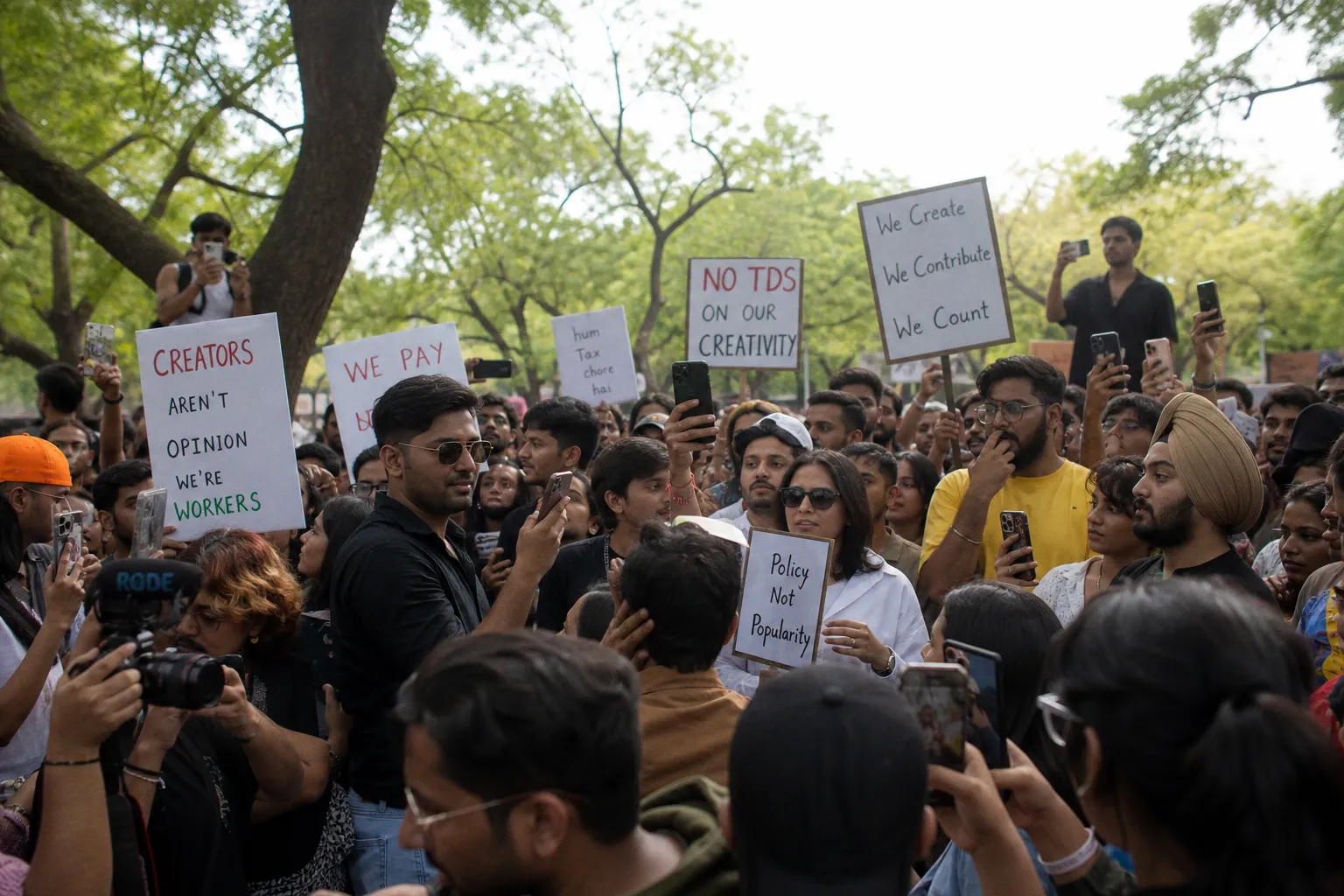
Jantar Mantar is India's most recognisable protest site. The fact that creator-economy grievances have migrated there — reportedly alongside Citizens for Justice and Peace mobilisation — marks a shift from content grievance to structural demand. Creators aren't just complaining about algorithmic decay or demonetisation; they're framing platform economics as a civic issue.
For the global holding companies building India-facing creator ecosystems (Havas's PivotRoots acquisition being the most direct play), this introduces political risk into what was pitched as a pure performance-marketing thesis. Infrastructure investment assumes creators will keep producing. Disillusioned creators may simply exit the pipeline.